


Family-friendly exhibition: Glimpses of Light and Hope
 05.06.2026 klo 11:00 - 18:00
 Suomenlinnan kirkko, Suomenlinna C 43, 00190 Helsinki
This exhibition, showcasing the history of Suomenlinna Church from the 18th century to present day, offers an impressive experience both for adults interested in history and for children with adventurous spirits.
Exhibition dates: 4 June – 30 September 2026
Church open: Mon–Fri 11–18
Admission is free for those under 18. Adults €5.
Suomenlinna Church has played an exceptionally significant role in Finland's history. In the 18th century, Suomenlinna, then known as Viapori, was Sweden's most significant and modern fortress against threats from the east. Earliest mentions of the wooden church date back to diaries from 1785. When Sweden lost Finland to Russia in 1809, a decision was made to rebuild the church. However, the first designs by Karl Ludvig Engel were too expensive to be realised, and Emperor Nikolai I assigned the task to St. Petersburg-based architect Konstantin Thon in 1836. The church, dedicated to the memory of Grand Prince Alexander Nevsky nearly 600 years after his passing, was completed and inaugurated in 1854. It is said that the brewer and distiller Nikolai Sinebrychoff's tavern was among the buildings cleared to make way for the church. This marked the beginning of the current church building's colourful and dramatic history.
From prison to air surveillance point
During Russian rule, the Viapori garrison church served Russian soldiers. The church was known for its striking iconostasis and blue onion domes rising above Iso Mustasaari Island, which were decorated with golden stars. In 1885, an enormous church bell weighing 6,683 kilograms was commissioned in Moscow. Today, the heaviest church bell in Finland rests on the grounds of Suomenlinna Church, and its deep tolling was heard at the church's 170th anniversary celebration on 1 September 2024, among other occasions.
In 1917, a revolution in Russia allowed Finland to gain independence. A year later, Finland drifted into a civil war, and Suomenlinna became a prison camp maintained by the Whites. The church's crypt was converted into a detention facility for captured Red Army soldiers – in other words, a prison. Stories tell of how sick and starving prisoners awaited their deaths as the church bells tolled high above.
In the 1920s, there was a growing desire to break away from the Orthodox practices at Suomenlinna, and it was converted into a Lutheran church under the leadership of the National Board of Public Building. A design competition was held, and Einar Sjöström's plan was selected – one of the three entries he submitted. The church was renovated between 1927 and 1929, and a lighthouse dome was installed atop the clock tower.
After a few more peaceful years, the nation and the church – together with the rest of Europe – faced new wars. In the Continuation War in 1943, the church tower served as an important air surveillance point, where Lottas, members of the Lotta Svärd organisation, monitored the Helsinki airspace.
H as in Helsinki
To this day, the light from the church dome and the radar beacon continue to guide seafarers through the treacherous coastal waters of Helsinki, littered with islands, shoals and rocks. Originally electrically powered and later equipped with a gas backup system, the lighthouse now uses modern LED technology. The beacon stands 54 meters above sea level, making it the tallest in Finland. As the light is in a church tower, it is not actually classified as a lighthouse – the tallest official lighthouse would be Bengtskär, rising 51 metres above sea level.
High above the coast of Helsinki, the light continues to shine, emitting the same letter H in Morse code as it did almost 100 years ago.
Family-friendly exhibition of Suomenlinna Church brings history to life
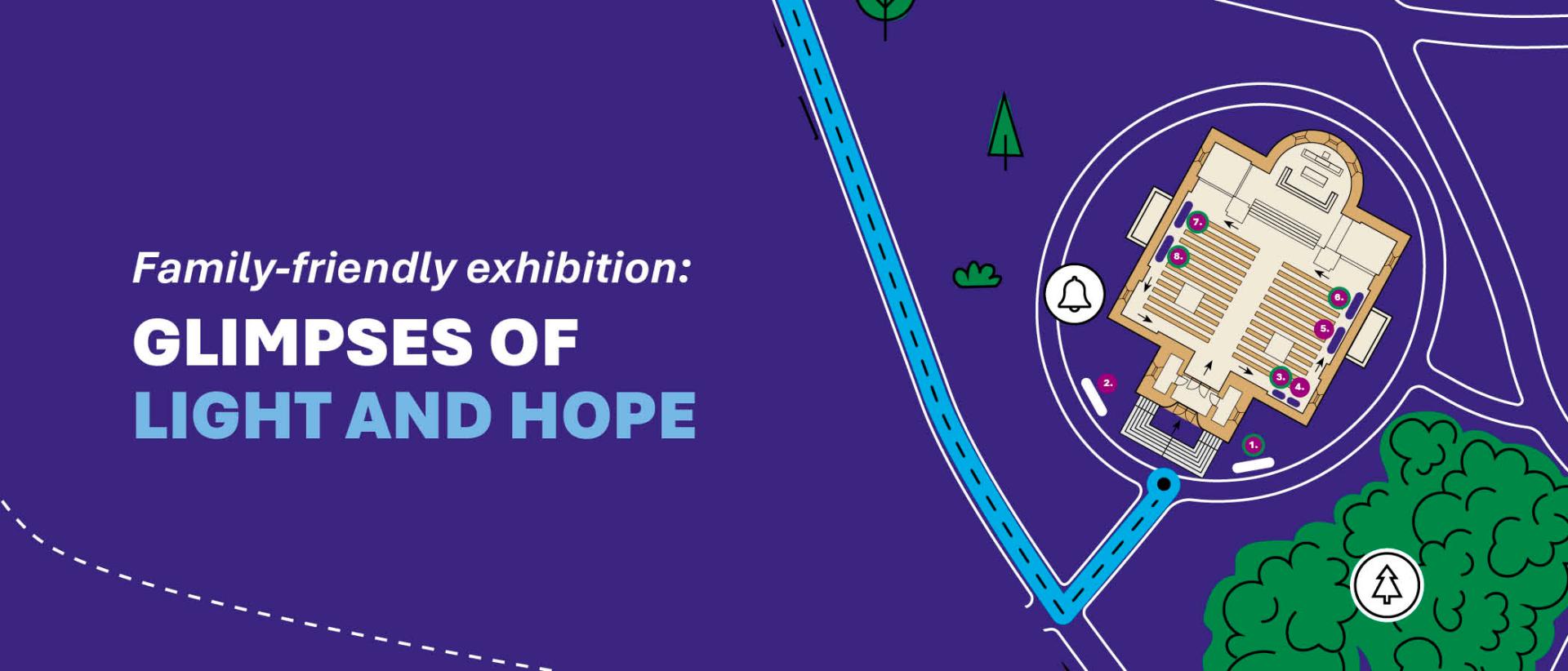
Materials dating back to the 18th century, including unprecedented pieces and facts greater than fiction, have been compiled into an exhibition in the courtyard and indoor areas of Suomenlinna Church. You can go through the historic trail on your own and deepen the exhibition experience with additional content using QR codes. Basic information is available at the exhibition in Finnish, Swedish and English, and through QR codes in numerous other languages.
Special QR codes for children have been hidden along the trail, where even the little ones can embark on an exciting historical journey through colourful images and animations. At the end of the children's trail, an exciting secret will be revealed!


